TVU Networks introduces TVU One IP, a new all-IP transmitter designed for NDI, UVC and other IP-based sources, giving production teams a reliable way to send finished live programs without traditional SDI infrastructure....
How TVU’s Cloud Production Powered Cross-Border Broadcasting of the U20 Women’s World Handball Championship
TVU's cloud production system — eight bonded-cellular backpacks feeding a cloud switching hub — let the broadcast team deliver the U20 Women's World Handball Championship live from four venues in China to international audiences across 116 matches without a single outage.
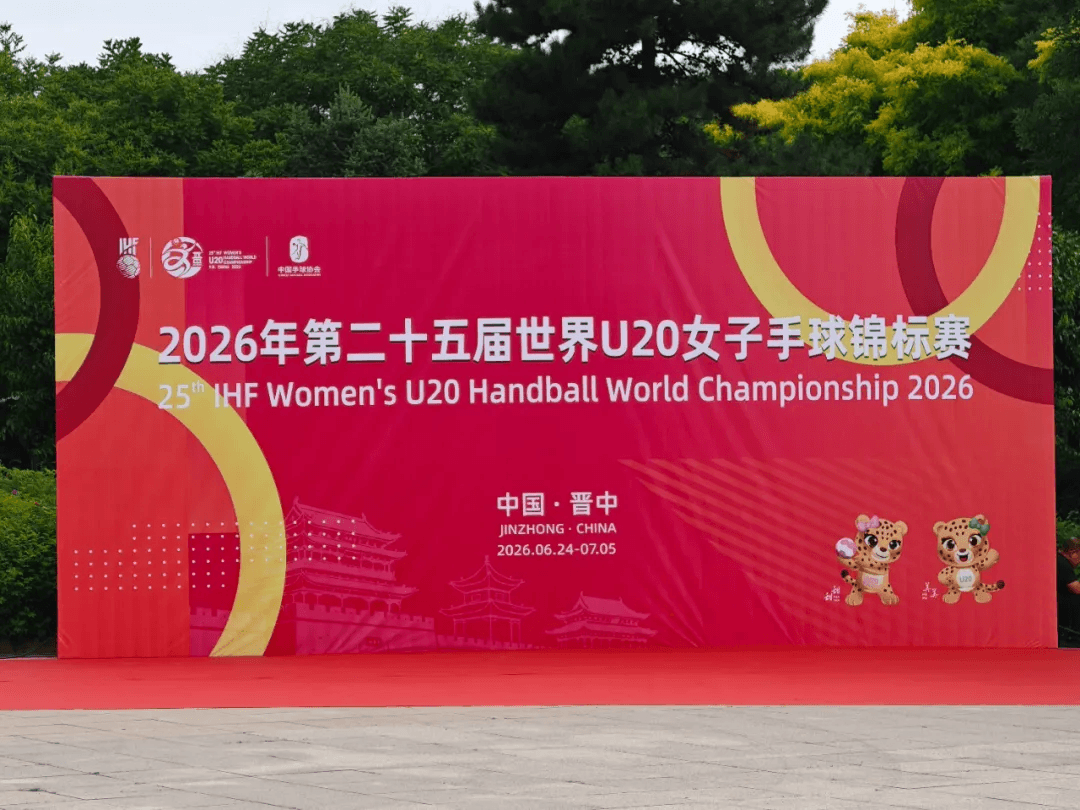
View Related ProductsIn late June 2026, the city of Jinzhong, in China’s Shanxi province, hosted the IHF Women’s Youth (U20) World Handball Championship.
The International Handball Federation (IHF) — handball’s global governing body, roughly equivalent to FIFA for soccer — runs this tournament as its top-tier competition for women players under 20. It had never been held in China before. For the 25th edition of the championship, 32 national youth teams from six continents traveled to Jinzhong to play 116 matches in just 12 days, spread across four separate venues.
The challenge: four venues, a dense schedule, and cross-border delivery
Matches took place simultaneously across four venues in Jinzhong, with a dense schedule and overlapping match times. As the first time an event of this level had been held in China, the broadcast team faced three practical challenges:
- Getting signal out of the venues reliably. The four arenas were spread across different parts of the city. Traditional dedicated broadcast circuits — leased fiber lines — take weeks to install and are expensive to run just for a 12-day event, especially with a schedule likely to shift at short notice.
- Keeping the signal stable once it left the country. International distribution means routing through multiple network hops before reaching an overseas platform. Handball is a fast transition sport — turnovers happen in seconds — so any latency spike or dropped frame is immediately visible.
- Monitoring everything from one place. With four venues each producing signal for multiple overseas broadcasters, there was no single view of what was working and what wasn’t — making it hard to catch problems before viewers noticed them.
The fix: bonded cellular backpacks plus a cloud switcher
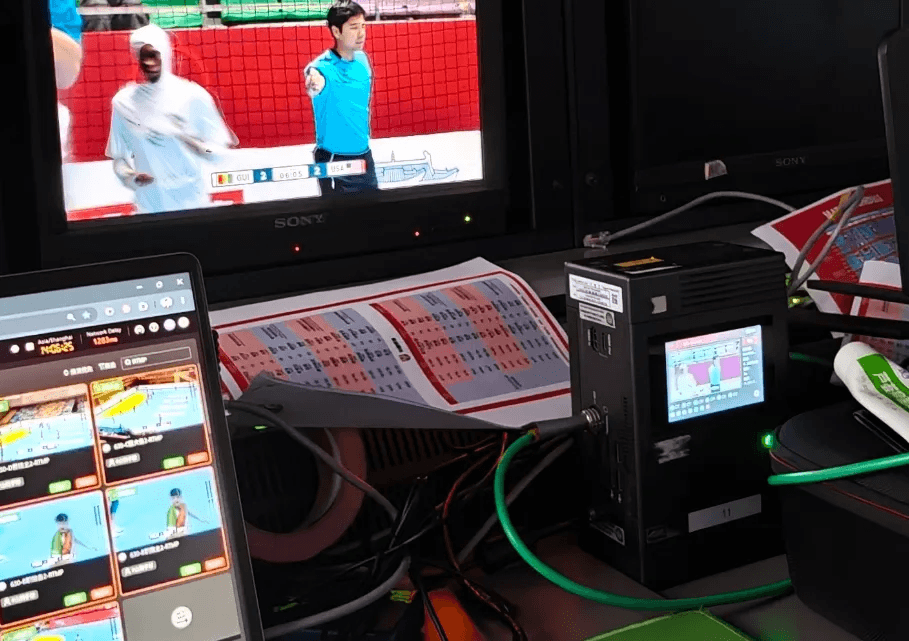
Rather than building temporary fiber infrastructure, the broadcast team — after testing several vendors — settled on a cloud-production setup built around two products from TVU Networks: the TVU One encoder/transmitter (“backpack”) and the TVU MediaHub cloud routing platform.
At each venue: two TVU One units were installed in a primary/backup pair — eight units in total across the four arenas. Each unit takes the same program feed from the venue’s production truck and independently bonds together whatever connectivity is available on site — wired internet, 5G, 4G, and Wi-Fi — encoding and uploading the signal to the cloud. If the primary unit’s connection degrades, the backup takes over automatically, so there’s no visible interruption.
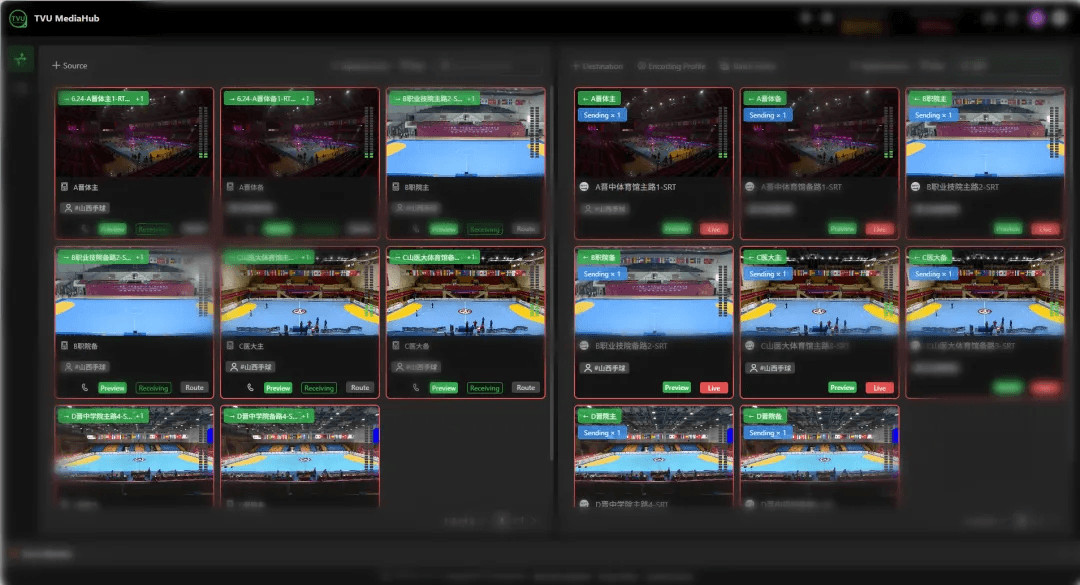
In the cloud: all eight venue feeds converge on TVU MediaHub, where a small remote team — working from a single internet-connected laptop rather than being on-site — monitors every feed, receives alerts if something goes wrong, and routes the combined signal out to multiple international broadcast partners simultaneously.
The technical pieces worth noting for anyone in broadcast operations:
- TVU’s proprietary ISX transmission protocol continuously blends multiple network connections and anticipates degradation on one link before it causes a visible problem, shifting load to other links pre-emptively rather than reactively.
- Smart VBR dynamically adjusts encoding bitrate based on how visually complex a scene is and how much bandwidth is currently available — prioritizing smooth playback over raw resolution when bandwidth is tight.
- The primary/backup hardware pairing means redundancy starts at the point of capture, not just somewhere downstream in the network.
On the MediaHub side, the platform’s role centers on four capabilities:
- Flexible routing: the same incoming feed can be pushed out to multiple international broadcast partners simultaneously — capture once, distribute many times.
- Unified monitoring: all incoming feeds are visualized in real time in one interface, so the team doesn’t need anyone physically on-site at each venue.
- Automated alerting: the system flags anomalies as they happen, so problems can be located and addressed quickly rather than being caught after the fact.
- Full logging: every transmission is recorded end-to-end, useful for post-event review and troubleshooting.
The result
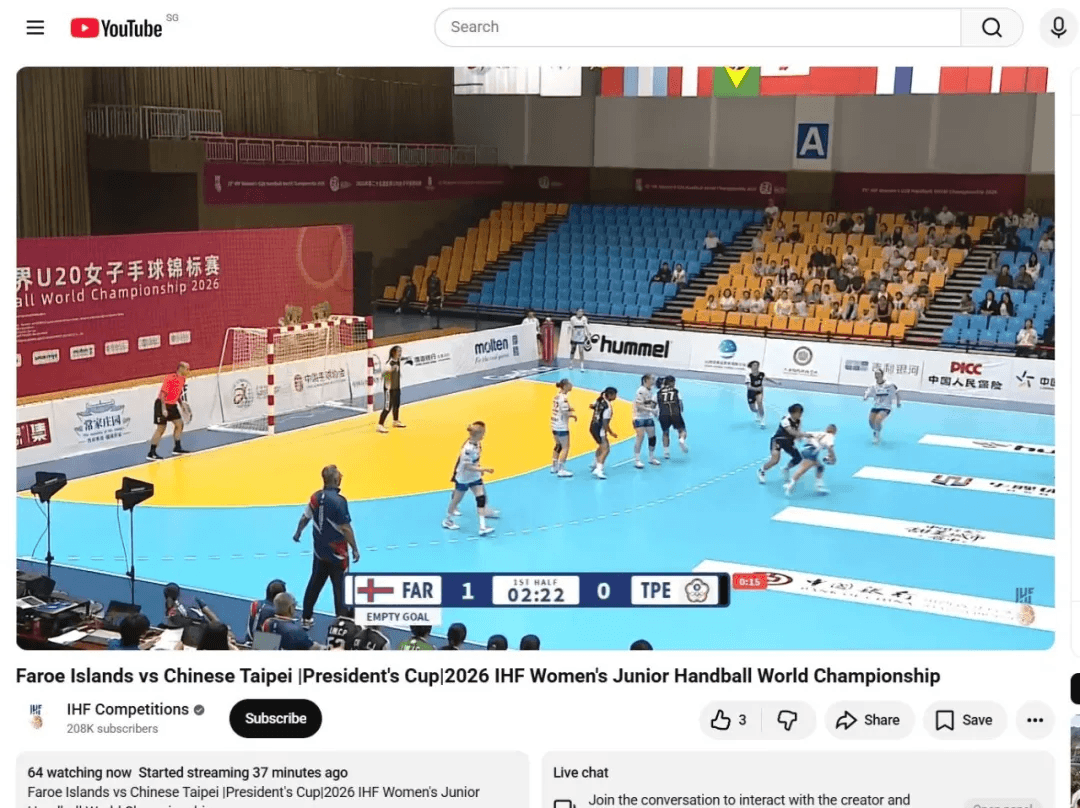
Over 12 days and 116 matches — from the opening ceremony through the host nation’s debut to the final — the setup ran without interruption, delivering a continuous international feed to broadcast partners across Europe and beyond.
Beyond the tournament itself, the case is a useful data point for anyone evaluating cloud-based remote production: a multi-venue international broadcast, in a location without existing dedicated broadcast infrastructure, was pulled off using consumer/cellular-grade connectivity plus software-defined redundancy — rather than the traditional model of leased satellite time or purpose-built fiber links.
