TVU Networks Powers Snapback Sports at the Border War: One Backpack, Zero Dead Zones, a Gameday Show With No Desk
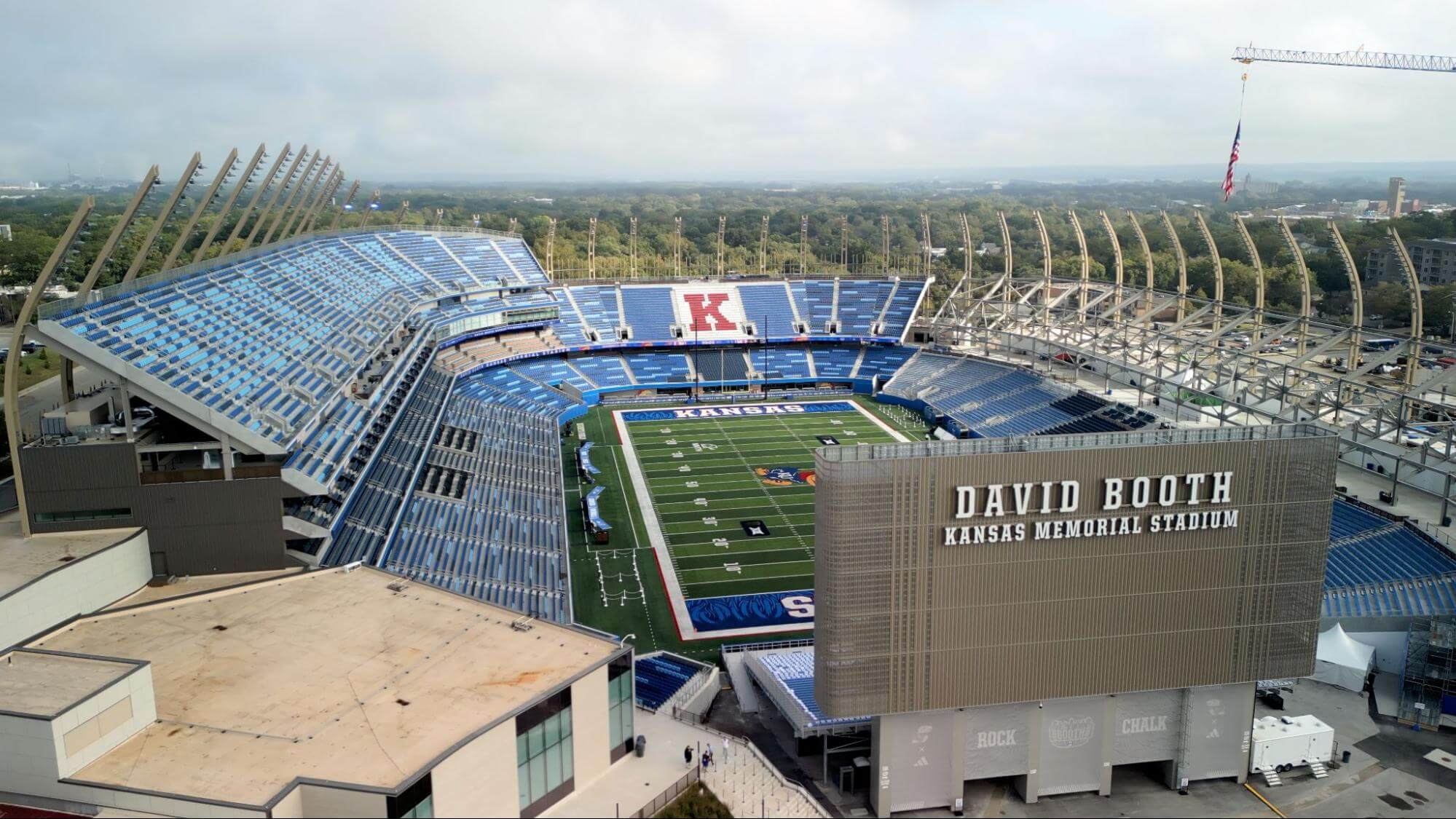
View Related ProductsLawrence, Kansas — September 10–11, 2026. When Kansas hosted No. 23 Missouri at David Booth Kansas Memorial Stadium for the first Friday-night edition of the Border War, the broadcast trucks lined up outside the stadium. Snapback Sports went the other way, into the tunnels, the team rooms, and the tailgate lots, bringing their audience live and along for the ride.
The Challenge
Snapback Sports does not make content about an event. It makes content at one.
That distinction is the whole business. Founder Jack Settleman started the brand in 2017 with a series of Snapchat stories from Texas–Oklahoma, and what worked was proximity: the bars, the tailgates, the walk to the stadium, the parts of a rivalry a studio desk structurally cannot reach. By 2026 that instinct had become “Snapback Saturdays,” a sixteen-stop college football tour co-hosted with former NFL running back Melvin Gordon, sponsored by Evan Williams, and built to feel like a second screen rather than a highlight reel.

Founder of Snapback Sports, Jack Settlemen (L) and a fan at the University of Kansas, Lawrence Kansas.
It worked: more than a million followers across platforms. Now Snapback is moving into live, streaming exclusive access the moment it happens. But going where the atmosphere is usually means going where the signal is not. The brand needed broadcast-grade reliability with a footprint small enough to carry up a stairwell.
Snapback Sports at a Glance
| Metric | Figure |
|---|---|
| Social impressions, Snapback Saturdays last season | 285 million |
| YouTube views, Snapback Saturdays last season | 3 million |
| Impressions from a single weekend (Holy War) | 18 million |
| Snapchat subscribers across accounts | 2 million+ |
| Followers across all platforms | 1 million+ |
| 2026 Snapback Saturdays tour stops | 16 campuses |
| Season | Third |
Figures compiled from public reporting across different dates and measurement methods. Confirm current numbers with the Snapback team before publication.
The Solution: A single TVU One
For the Border War stream, Snapback Sports used a TVU One transmission pack bonding cellular and Wi-Fi.
Instead of depending on one carrier or one network, the pack aggregates multiple connections into a single logical link and continuously rebalances the video across them. When one path degrades — a wall, a crowd, a stairwell, a sector swamped by a stadium full of fans — the encoder redistributes load rather than dropping frames. The stream does not know it happened. Neither does the audience.

Snapback Sports Crew walk the tunnel at David Booth Kansas Memorial Stadium, Lawrence, KS
The practical result at Kansas was that the crew could walk. Live tours ran through the new Anderson Family Football Complex and into Kansas Memorial Stadium, through areas fans are almost never shown, without a handoff, a “we’re having some connection issues,” or a cut back to a holding card. In the concrete basements and locker-room corridors where a standard phone stream visibly falls apart, the feed held. The Snapback crew calling it “crisp.”
The Results
Snapback delivered its audience exclusive access inside the Kansas football program — the new team room at the 50-yard line, the player tunnel, and the field itself less than 24 hours before kickoff — live throughout, interacting with the chat in real time.

Snapback Sports Crew walk the NFL Hall of Fame at David Booth Kansas Memorial Stadium, Lawrence, KS.
Adding live to the strategy is also changing how Snapback is valued in the market. The team no longer pitches brand managers a video; it pitches a show. In a category crowded with creators, that distinction is what makes a marketer stop and look, and it has opened doors a content package alone did not.
Why It Matters
Snapback Sports is not an outlier. It is an early data point. The creators winning live sports attention right now are doing something legacy broadcasters are structurally unable to copy: they go inside the building, they stay there, and they talk back. What used to stop them was transmission. Bonded cellular removes that constraint, and when it does, the remaining gap between a creator-led show and a network-produced one is editorial, not technical.
That is the real story of a backpack in a locker room in Lawrence. A media company with fewer than ten people on-site produced a continuous live show from inside a top-25 rivalry environment, at a quality that reads as broadcast, and distributed it directly to an audience it owns. Missouri won the game 38–21. The more durable outcome was the proof that a show like this no longer requires the infrastructure that used to define who was allowed to make one.
The trucks will keep coming to Lawrence. They just aren’t the only way in anymore.
